
Covey’s Time Management Matrix is a framework that divides tasks into four quadrants based on their urgency and importance. The matrix as a whole represents your available time, which cannot be expanded, but how you allocate time within each quadrant can be adjusted.
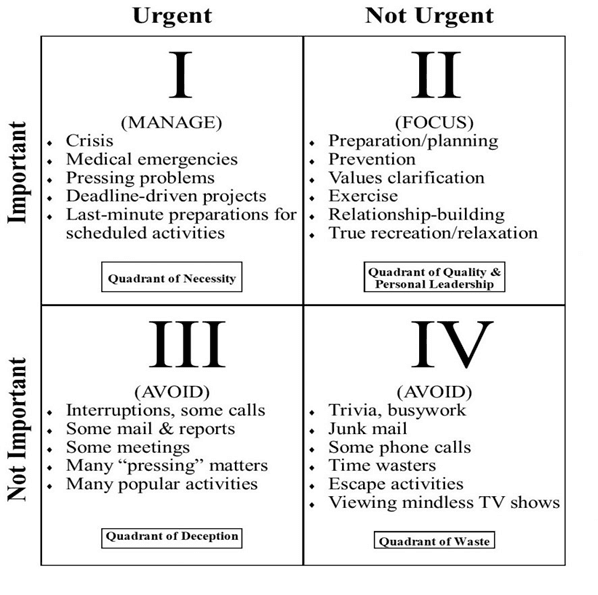
The key goal is to spend more time in Quadrant 2, which focuses on long-term goals and personal growth, while reducing time spent in the other quadrants. According to Stephen Covey, this approach forms the foundation of effective time management. Each quadrant helps in prioritising activities and responsibilities more efficiently.
Quadrant 1: Urgent and Important
This quadrant includes activities that are both urgent and essential. These tasks demand immediate attention and are often associated with high pressure or stress. Being aware of and properly classifying these activities ensures that you devote the necessary time and effort to them without being overwhelmed.
Quadrant 2: Not Urgent but Important
This quadrant focuses on activities that are important for achieving long-term goals but do not require immediate attention. Working in this area helps develop discipline, foresight and a proactive mindset. Tasks in this quadrant usually align with your purpose, values and top priorities, contributing to meaningful personal and professional growth.
Quadrant 3: Urgent but Not Important
Tasks in this quadrant appear urgent but are not truly important in the long run. These often involve distractions or interruptions that seem significant at the moment, such as unplanned calls or minor requests.
Many people spend too much time here, mistaking urgency for importance. These activities often reflect the priorities and expectations of others rather than one’s own goals. Reducing time spent in this quadrant allows for more focus on truly important work.
Quadrant 4: Not Urgent and Not Important
This quadrant includes activities that are neither urgent nor important. They often provide little value and may lead to wasted time. It is essential to identify such tasks and eliminate or minimise them wherever possible. Doing so allows you to allocate more time to meaningful and productive activities.